Identity & meaning
The messages a self-image carries
Recognition, expectations and belonging become part of the stories we hold about ourselves.
A wider lens on human experience
Understanding ourselves through relationships.
Turning reflection into change.
DORRT explores how our inner lives, relationships and social conditions shape one another.
Explore the theory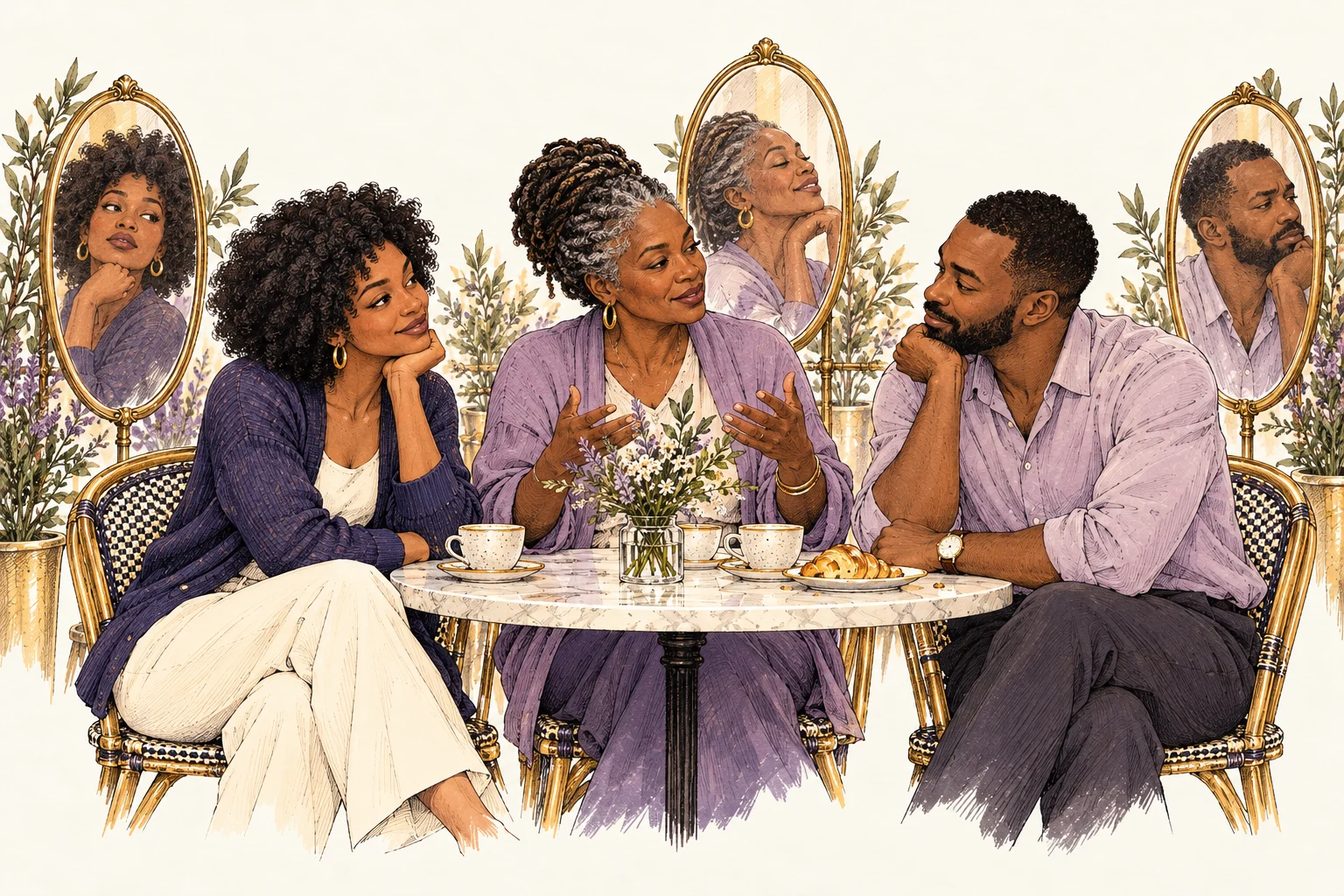
01 / The theory
Dynamic Object Relational Reflection Theory is a proposed framework for understanding the continuous exchange between the inner world and the social world. It builds on object-relations thought while making culture, power, equity and anti-racism explicit parts of the analysis.
Reflection connects the inner world with lived experience.
Explore the connections
Experiences of recognition, belonging and exclusion can become part of how we understand ourselves. Those understandings also shape how we perceive and respond to others.
What does the way I see another person reveal about how I see myself?
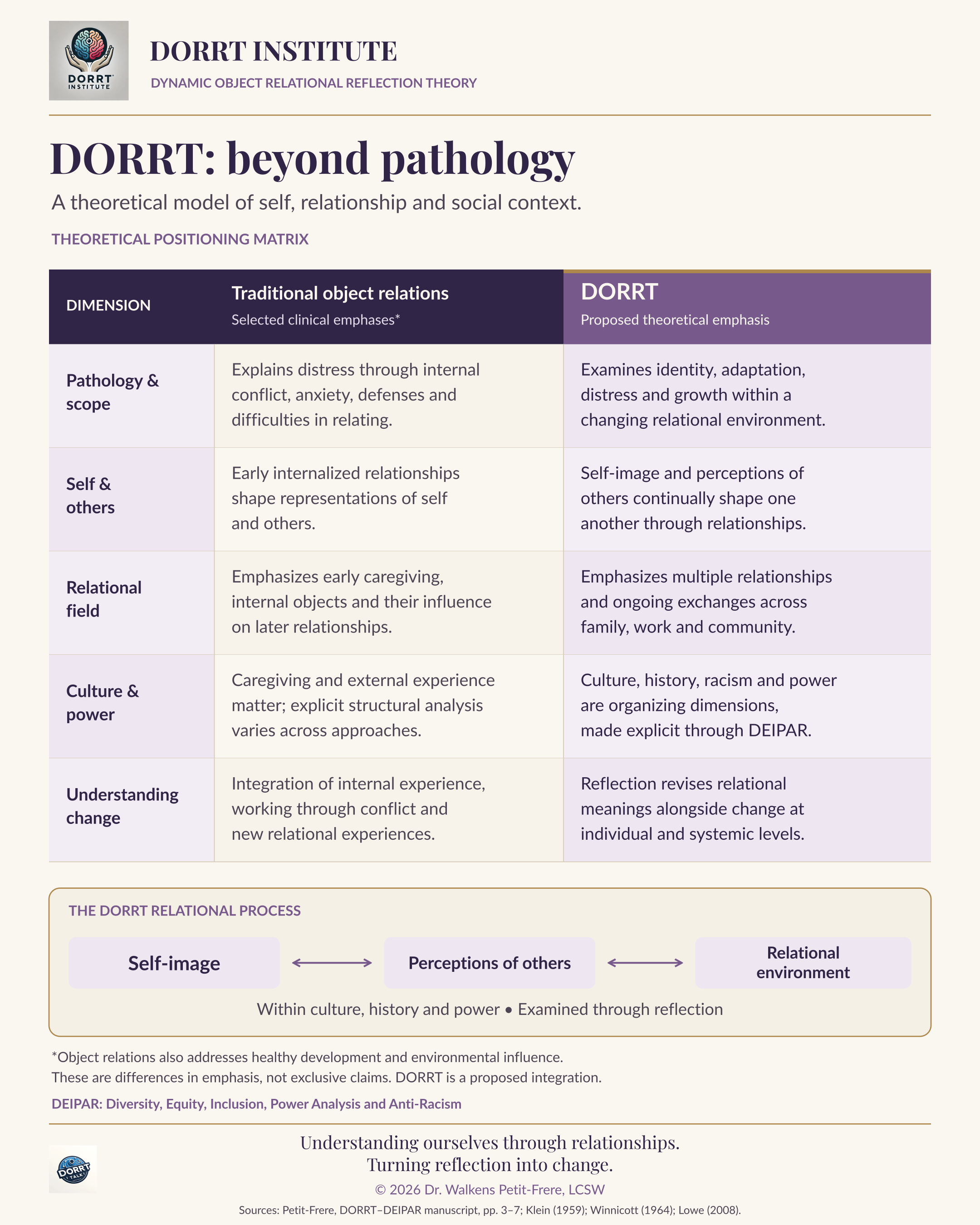
Theoretical positioning
DORRT places identity, adaptation and growth alongside distress. Its focus extends from internalized experience to the relationships and social conditions that continue to shape a life.
Internal conflict, anxiety, defenses and difficulties in relating.
Identity, adaptation, distress and growth within a changing relational environment.
Early internalized relationships shape representations of self and others.
Self-image and perceptions of others continually shape one another through relationships.
Early caregiving, internal objects and their influence on later relationships.
Multiple relationships and ongoing exchanges across family, work and community.
Caregiving and external experience matter; explicit structural analysis varies.
Culture, history, racism and power are organizing dimensions through DEIPAR.
Integration, working through conflict and new relational experiences.
Reflection on relational meanings alongside individual and systemic change.
Object-relations traditions also address healthy development and environmental influence. This comparison describes differences in emphasis, not exclusive claims. DORRT is a proposed integration.
The commitments within the model
DEIPAR brings five commitments into the way DORRT considers human experience. Each asks us to examine both meaning and the conditions in which meaning takes shape.
DEIPARRecognize the breadth of human experience and the different cultural narratives through which people understand themselves and others.
Attend to historical and structural disadvantage, including unequal access to resources, opportunity and influence.
Make room for people’s knowledge and participation in the relationships and decisions that affect their lives.
Examine whose perspectives carry authority, how power is internalized and how it shapes relationships and institutions.
Recognize racism’s psychological and systemic effects, and connect understanding with efforts to change inequitable practices and structures.
02 / The Institute
A place to explore the connections between who we are, how we relate and the world we inhabit.
DORRT Institute’s mission is to develop and share Dynamic Object Relational Reflection Theory through thoughtful inquiry into human experience. Its focus brings together psychotherapy, social work and research, with cultural responsiveness and social justice at the center.
Developing concepts, inviting critical dialogue and asking how the framework can be examined.
Making theoretical ideas accessible to practitioners, educators and curious readers.
Connecting understanding of personal experience with the conditions shaping collective life.
03 / DORRT Talk

Reflections on self,
relationship and society.
Identity & meaning
Recognition, expectations and belonging become part of the stories we hold about ourselves.
Reflection & humility
Every account of a relationship comes from a particular position. What might another view reveal?
Culture & power
What comes into view when we consider relationships, resources, expectations and power together?

04 / Our founder
Psychotherapist. Social worker. Researcher.
Dr. Walkens Petit-Frere is the developer of Dynamic Object Relational Reflection Theory. His work explores connections among internalized experiences, relational patterns and systemic conditions.
Through DORRT, he proposes a framework that places psychological understanding alongside cultural responsiveness, power analysis and anti-racism.
Connect with the InstituteContinue the conversation
For conversations about DORRT, research, education or collaboration, connect with Dr. Walkens Petit-Frere.
Contact the Institute wpetitfrere@gmail.com